
De la Infección a la Recuperación: Tratamiento de Úlcera Fúngica con Natamicina
Barra lateral del artículo
Contenido principal del artículo
Resumen
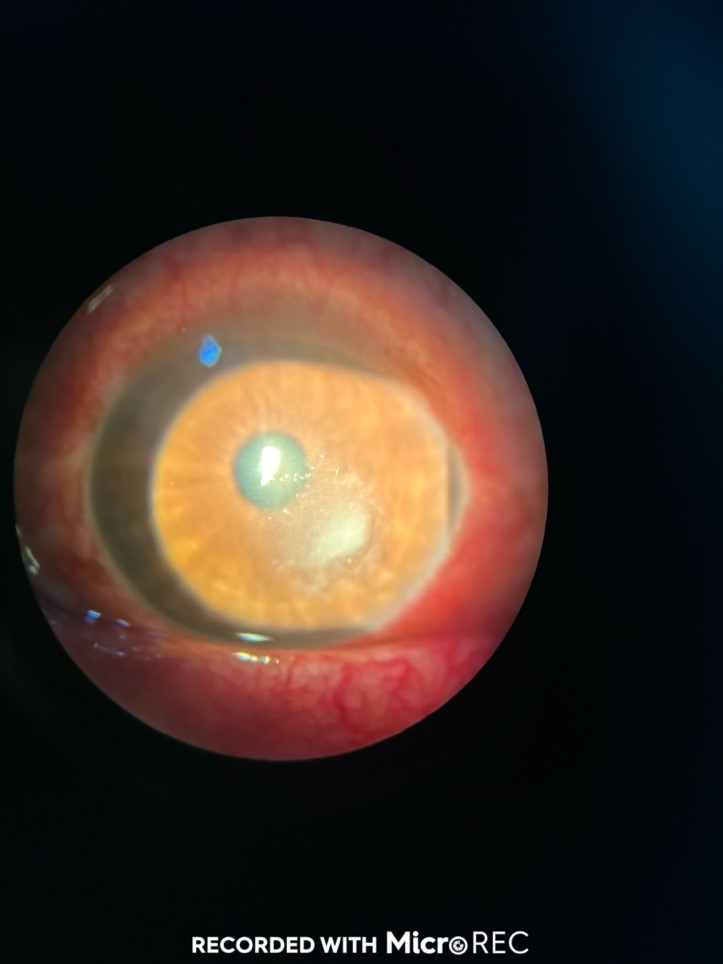
Las úlceras corneales fúngicas tienen una mayor prevalencia en personas que trabajan en el campo y afectan a individuos en edad productiva laboral, por lo que tienen un gran impacto a nivel económico en los países tercermundistas. Es por esto de suma importancia un diagnóstico y tratamiento adecuado y rápido, para promover la prevención contra la ceguera causada por enfermedades infecciosas. Para que exista el desarrollo de una úlcera corneal fúngica tiene que existir una abrasión de la barrera normal ocular. Cualquier tipo de hongo puede causar una infección a nivel del ojo, los más comunes son los hongos filamentosos y las levaduras. Dentro de las manifestaciones clínicas suelen aparecer signos y síntomas 1 a 3 días después de la injuria, que se caracterizan por infiltrados blancos grisáceos, con una textura rugosa, bordes irregulares y plumosos; se puede extender hasta el estroma, infiltrados satélites, en ocasiones hipopión, secreción purulenta, inflamación de cámara anterior y micro abscesos. El único antifúngico de uso ocular es la Natamicina, sin embargo, en Centroamérica se carece de este medicamento, que representa el 90% de efectividad para las úlceras fúngicas. Gracias a donaciones de médicos norteamericanos se contó con este fármaco, lo cual hizo posible esta investigación.
Detalles del artículo

Esta obra está bajo una licencia internacional Creative Commons Atribución-NoComercial-CompartirIgual 4.0.